

Introduction
Preparing for exams isn’t just about reviewing content—it’s about practicing the right questions in the right format. The Exam-Specific Questions feature is designed to bridge that gap by transforming your study materials into targeted questions that mirror real exam experiences. Instead of relying on generic practice, this feature allows you to generate questions aligned with specific exams—such as USMLE, MCAT, NCLEX, AP, LSAT, CFA and more—so you can practice with questions that match your actual exam format and complexity.Accessing Exam-Specific Question Type Feature
The Exam-Specific Question type can be accessed when generating both QuizFetch and Practice Test.Within QuizFetch
For step-by-step instructions on how to navigate to the Exam-Specific Question Types within QuizFetch please refer to the Creating Your Quiz section.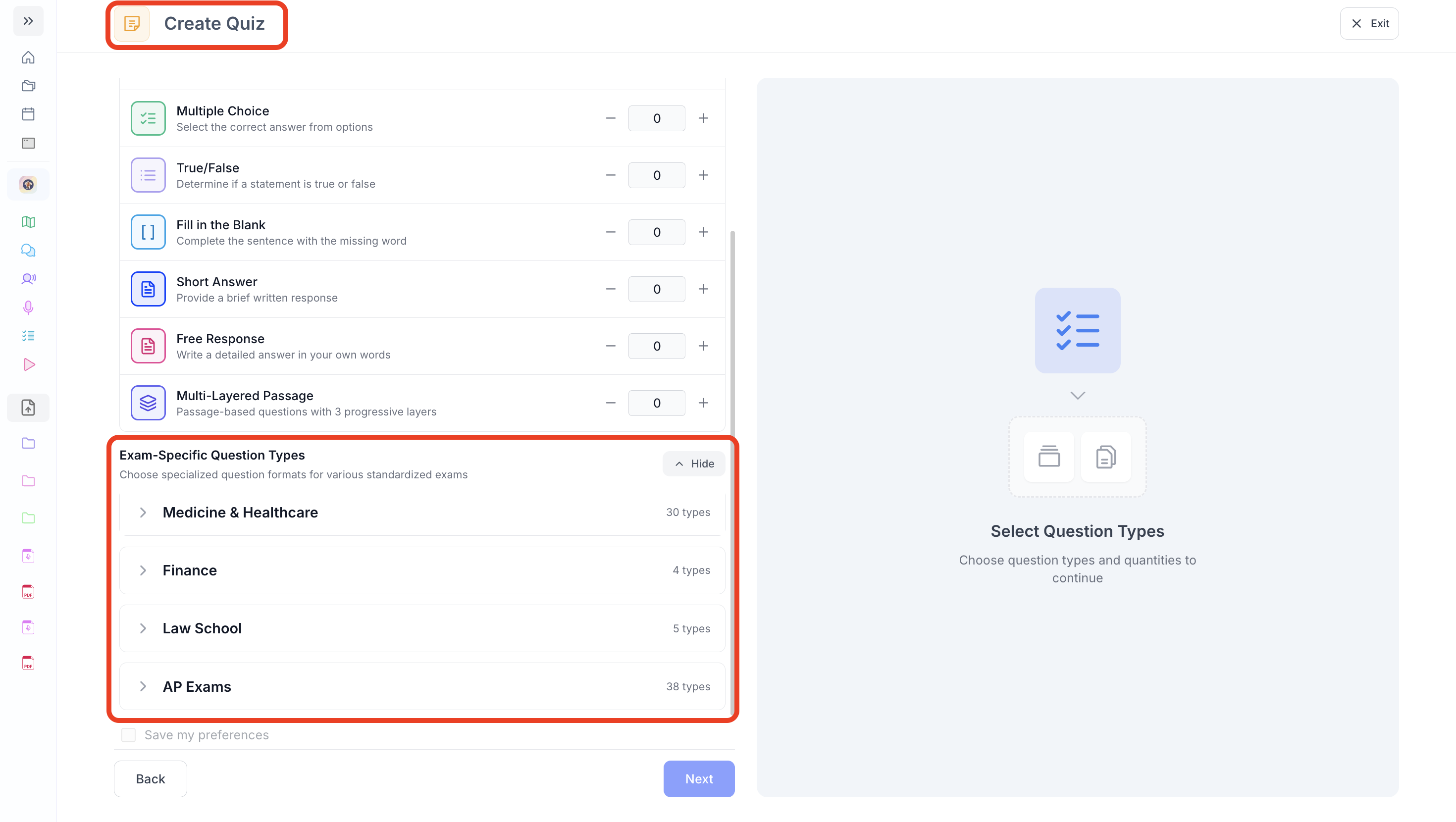
Within Practice Test
For step-by-step instructions on how to navigate to the Exam-Specific Question Types within Practice Tests please refer to the Creating Your Test section.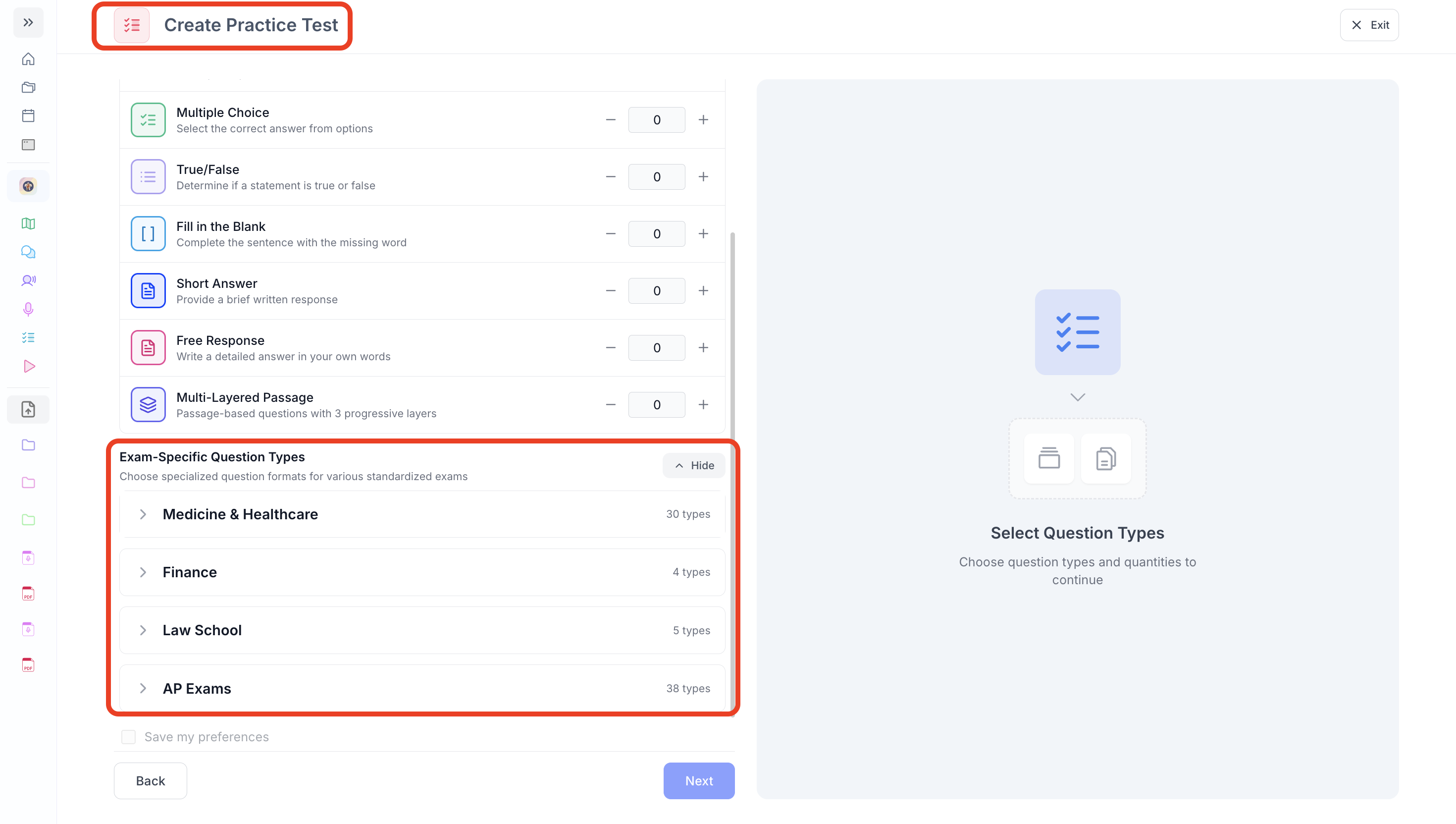
Exam-Specific Question Types by Exam
The following section outlines all available Exam-Specific Question Types, with corresponding examples.- To select the question formats below, first click Show to the right of the Exam-Specific Question Types field.
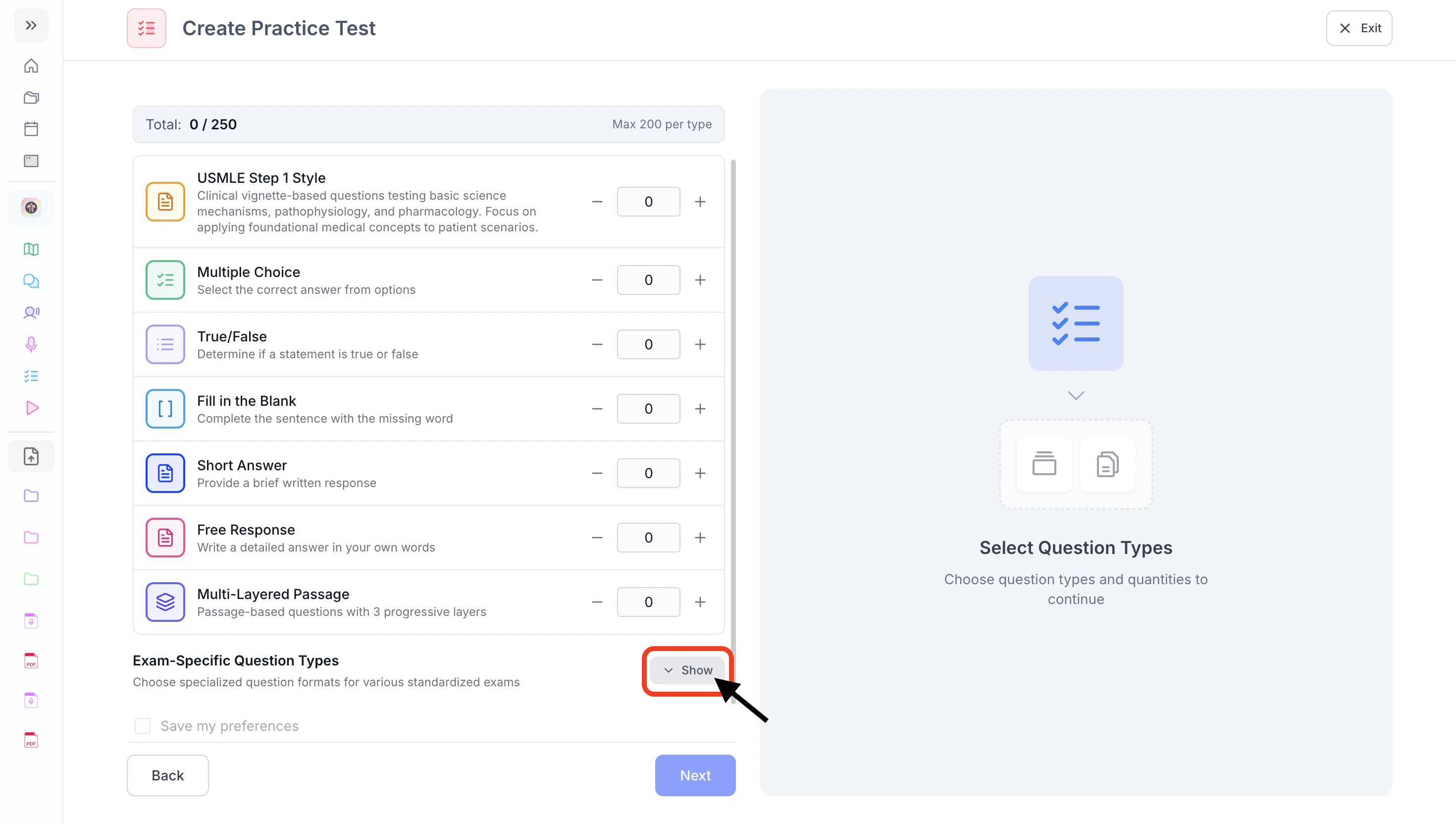
- Proceed to your Exam type below for more information.
Medicine & Healthcare
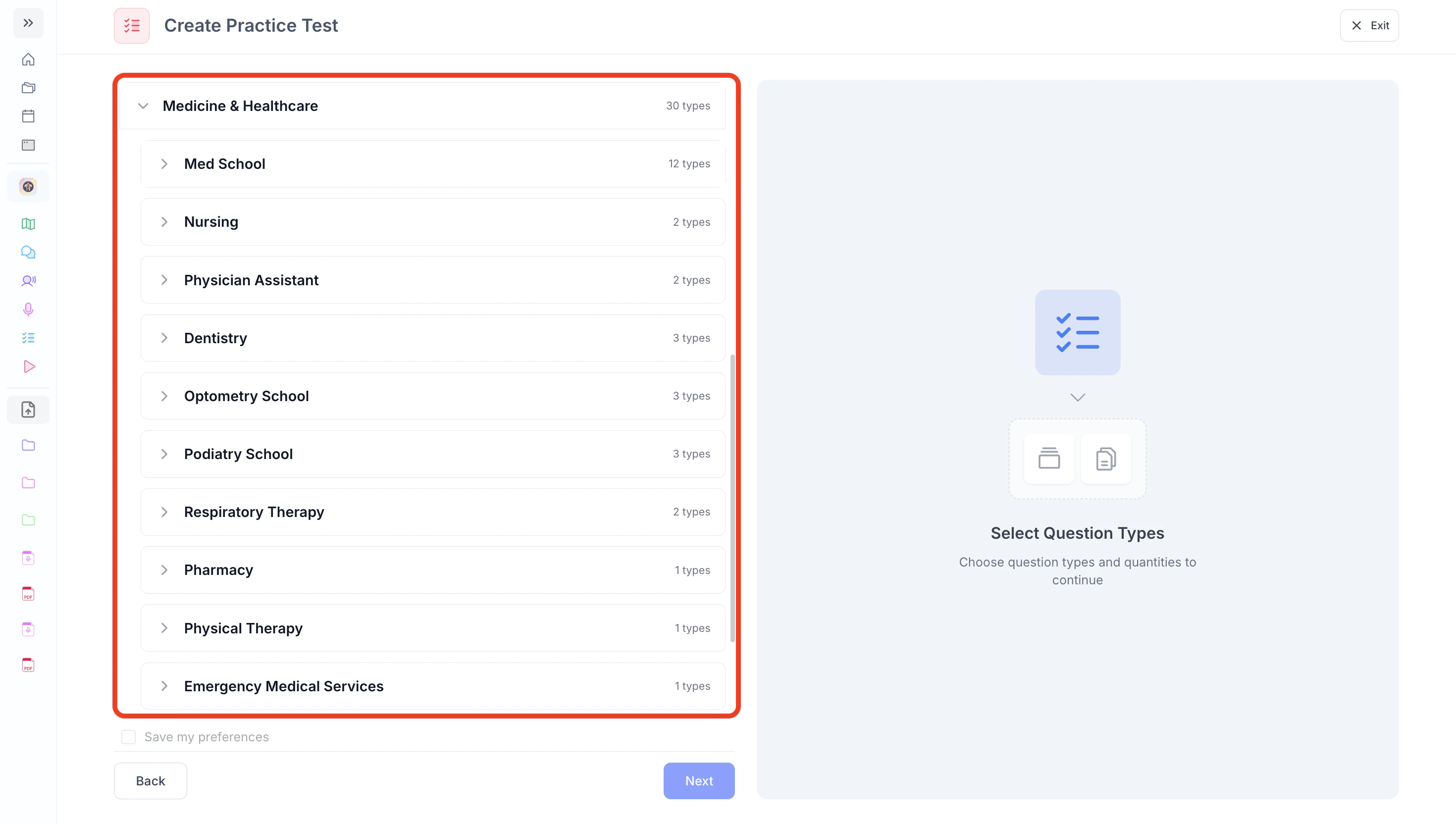
Med School
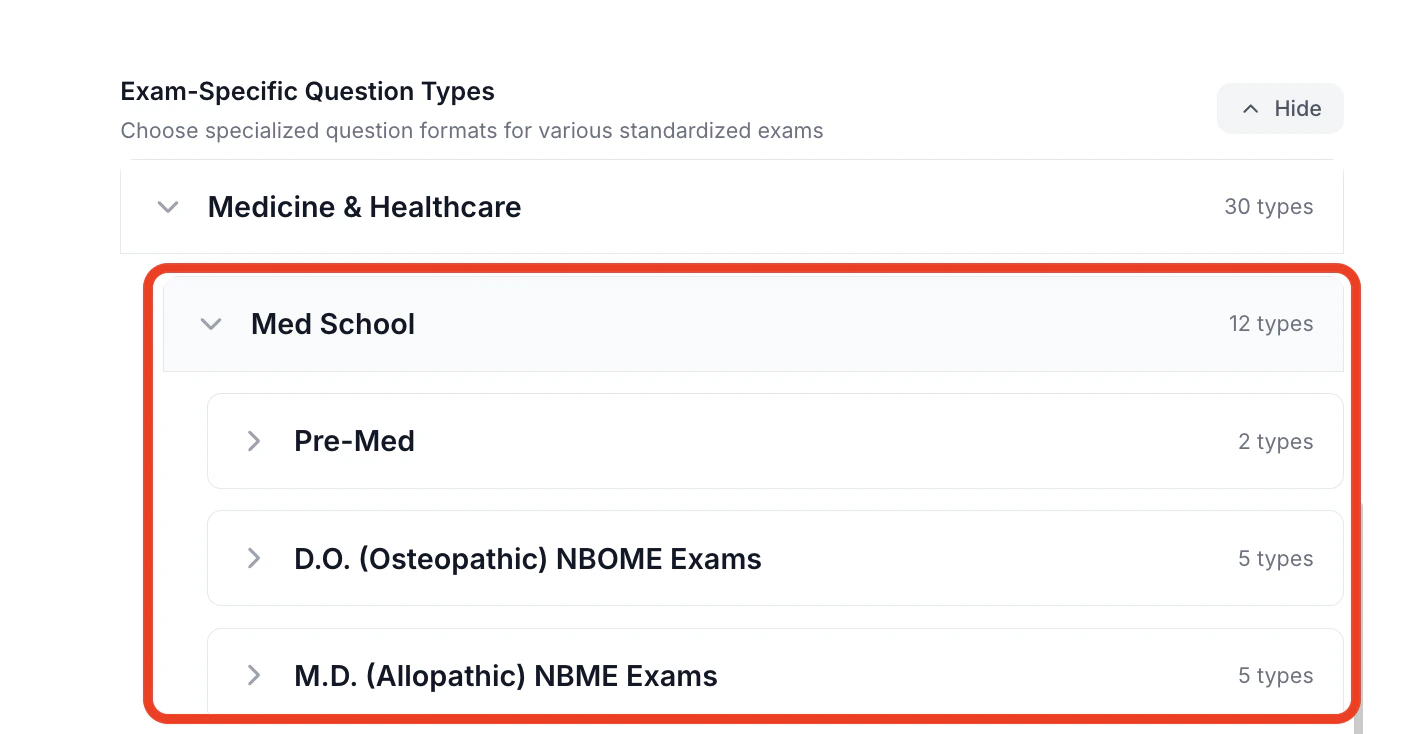
Pre-Med
- Select Medicine & Healthcare → Med School → Pre-Med → select from the below options.
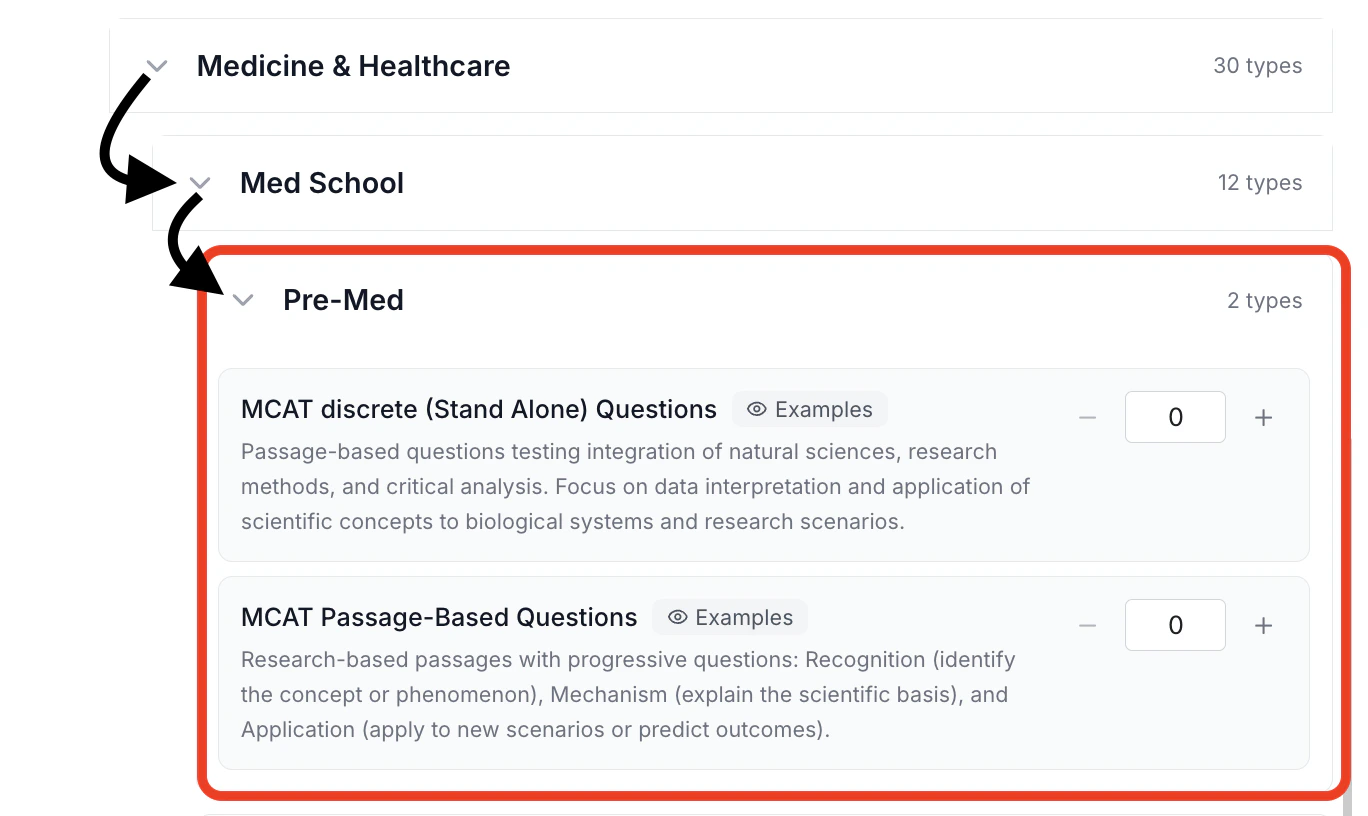
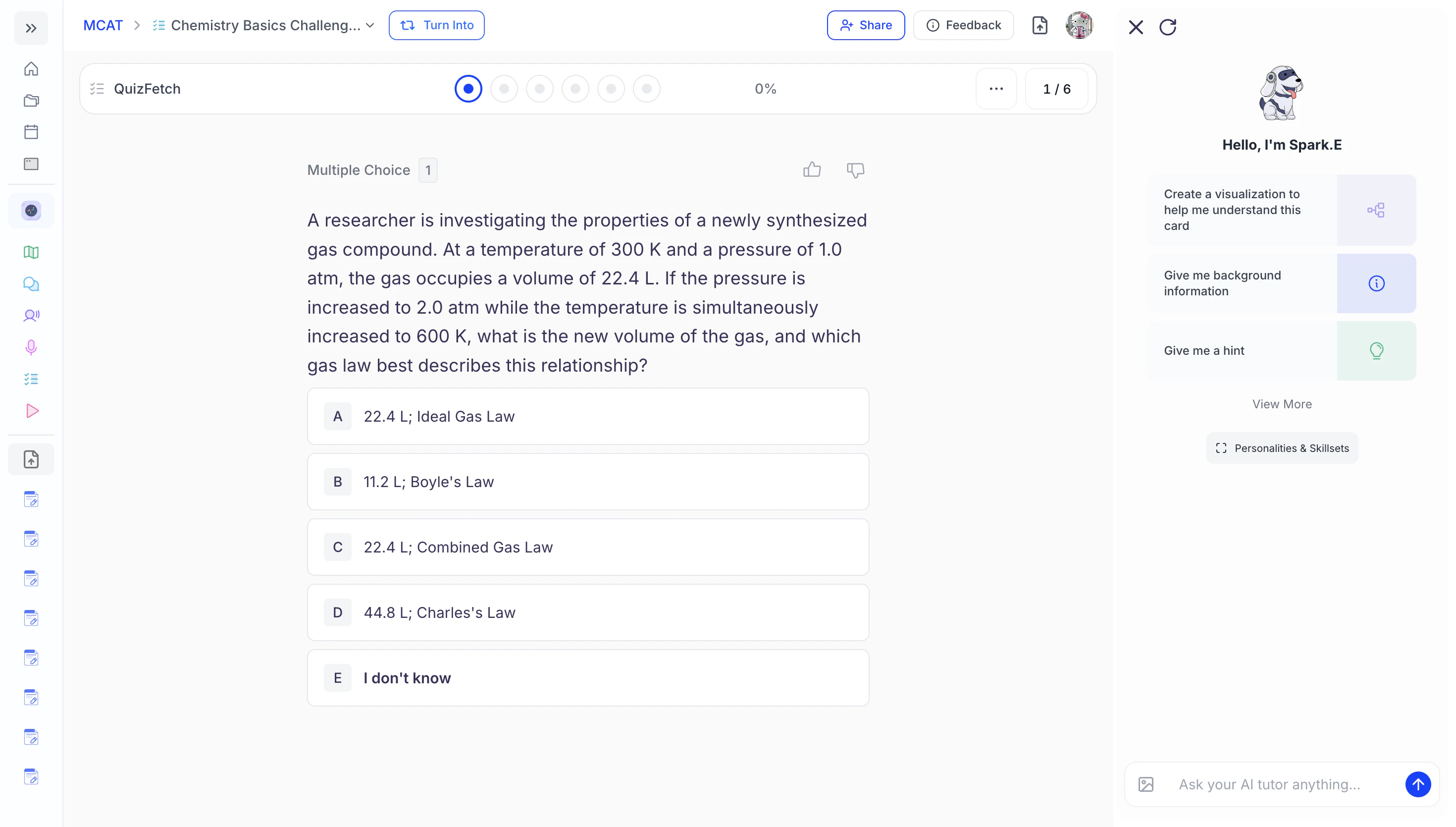
- MCAT discrete (Stand Alone) Questions
- Passage-based questions testing integration of natural sciences, research methods, and critical analysis.
- Focus on data interpretation and application of scientific concepts to biological systems and research scenarios.
- MCAT Passage-Based Questions
- Research-based passages with progressive questions:
- Recognition- identify the concept or phenomenon.
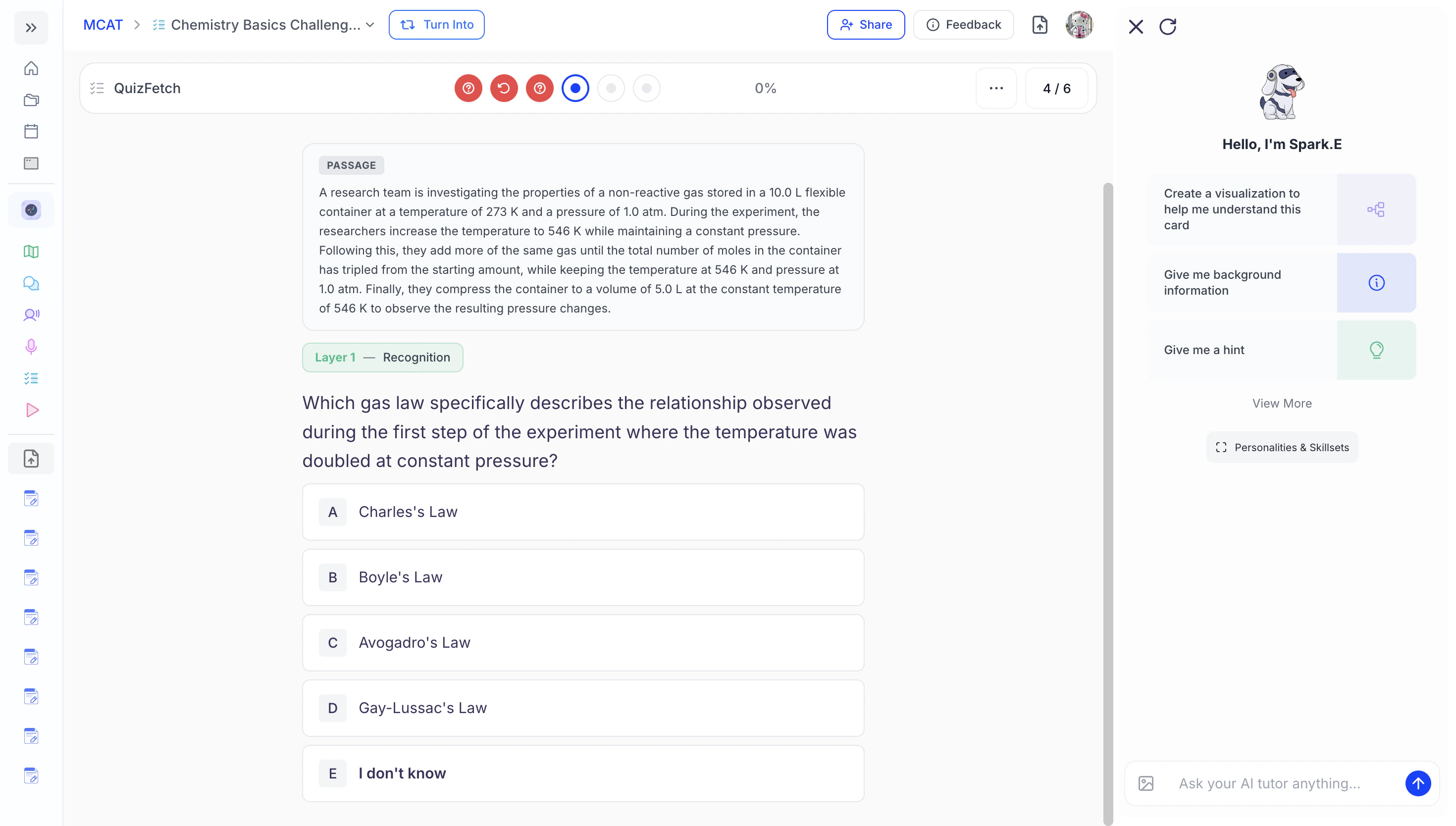
- Mechanism- explain the scientific basis.
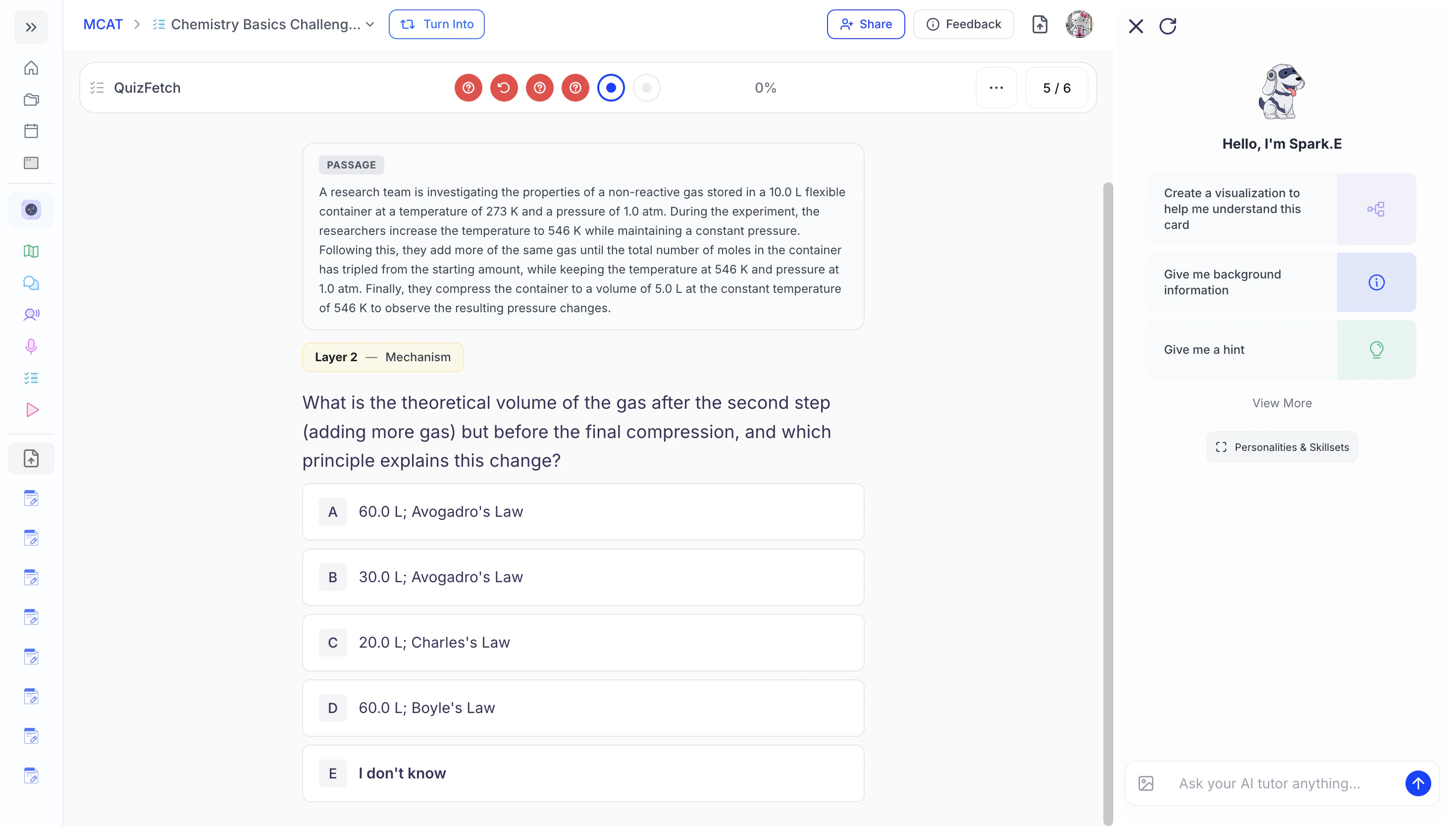
- Application- apply to new scenarios or predict outcomes.
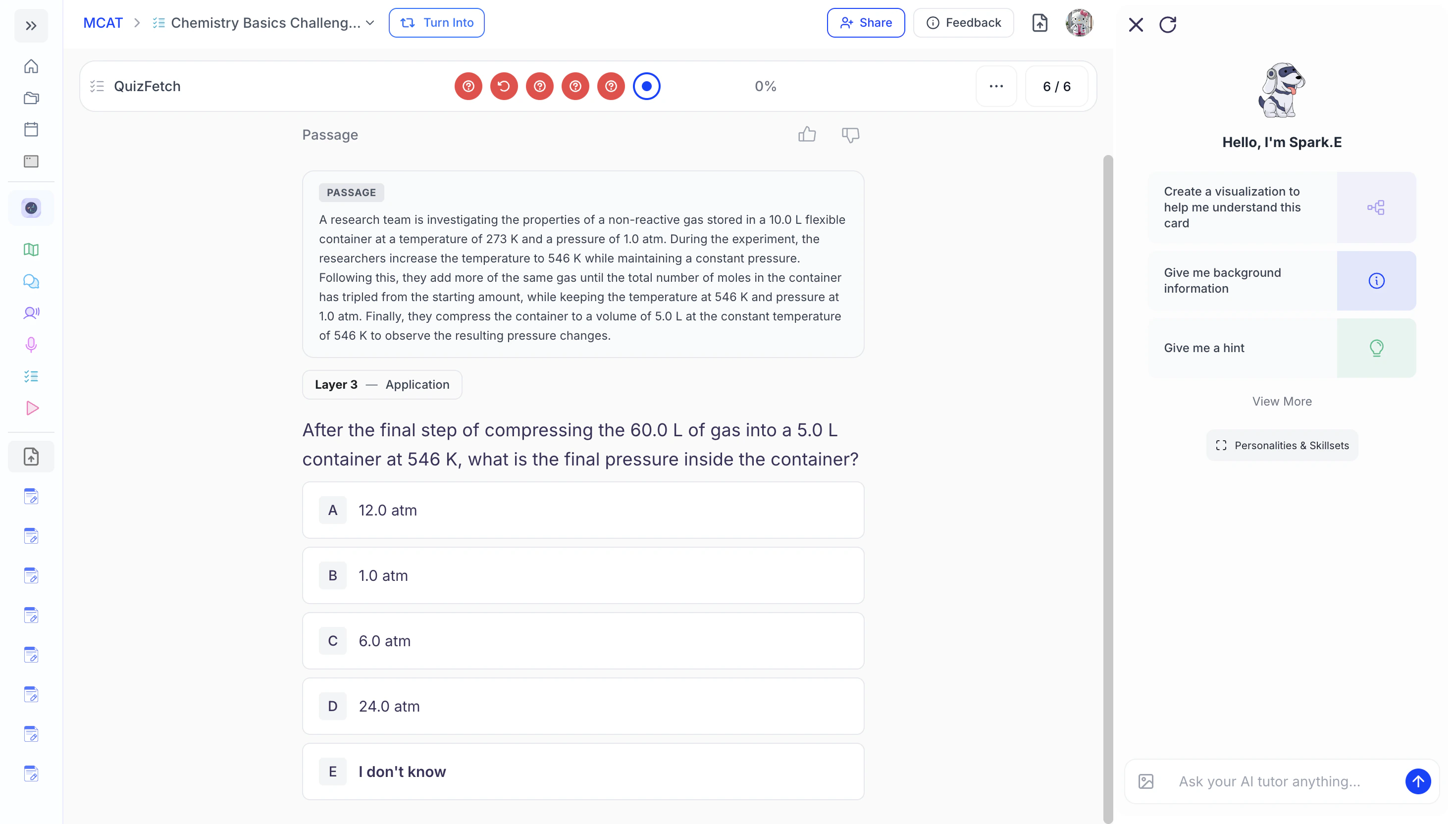
- Recognition- identify the concept or phenomenon.
- Research-based passages with progressive questions:
D.O. (Osteopathic) NBOME Exams
- COMLEX Level 1 Style
- Clinical vignette-based questions testing basic science mechanisms, pathophysiology, pharmacology, and osteopathic principles.
- Focus on integrating foundational medical concepts with osteopathic manipulative medicine (OMM) principles.
- COMLEX Level 2 Cognitive Evaluation Style
- Patient-centered scenarios testing clinical knowledge, diagnosis, management, and osteopathic considerations.
- Focus on integrating OMM into comprehensive patient care and evidence-based clinical decision-making.
- COMLEX Level 3 Style
- Complex clinical scenarios testing readiness for independent osteopathic practice.
- Focus on patient management over time, integrating OMM into comprehensive care plans, and demonstrating osteopathic philosophy in practice.
- COMAT FBS Style
- Pre-clinical assessment covering foundational biomedical sciences with osteopathic integration.
- Tests basic science knowledge across body systems and disciplines including biochemistry, anatomy, microbiology, physiology, pharmacology, and neurosciences.
- COMAT Clinical Subject Exam Style
- End-of-rotation clinical assessments integrating osteopathic principles with specialty knowledge.
- Tests clinical diagnosis, management, diagnostic interpretation, and application of osteopathic manipulative medicine across clinical disciplines.